Litigation Watch: Second Circuit Breaks With Fifth and Eighth, Sets Up Likely Supreme Court Showdown on Immigration Detention
Litigation Watch is a series of blog posts analyzing major federal cases related to immigration programs. Be sure to follow along for important litigation insights from Elevate Justice U.S. Immigration Law.
The Circuit Split Is Now Official
In our earlier post on Buenrostro-Mendez v. Bondi (5th Cir.) and Herrera Avila v. Bondi (8th Cir.), we predicted that the question of whether long-term residents who entered without inspection can be held under mandatory detention without a bond hearing would likely return to the Supreme Court. That prediction now has a clear vehicle.
On April 28, 2026, the United States Court of Appeals for the Second Circuit decided Cunha v. Freden, No. 25-3141, and reached the opposite conclusion of the Fifth and Eighth Circuits. The court held that 8 U.S.C. § 1226(a), not § 1225(b)(2)(A), governs the detention of noncitizens who entered the United States without inspection years ago and are now living in the interior. That means individuals like the petitioner in Cunha are eligible for a bond hearing.
With three federal appellate courts now in open disagreement on a question affecting millions of long-term residents, the path to the Supreme Court is no longer hypothetical. It is the most likely outcome.
What Happened in Cunha v. Freden in the Second Circuit
Ricardo Aparecido Barbosa da Cunha entered the United States from Brazil without inspection in roughly 2005 and has lived here for more than twenty years. He owns a home in Massachusetts, is married with two U.S.-citizen children, runs a small construction business, and has never been arrested for or charged with a crime. He filed for asylum in 2016 and has held a valid work permit ever since.
In September 2025, ICE officers arrested him on his drive to work in Norwood, Massachusetts, on an administrative warrant citing § 1226 as the basis for the arrest. The Department of Homeland Security charged him with inadmissibility and placed him into removal proceedings. When he requested a bond hearing, the immigration judge denied it on the ground that he was subject to mandatory detention under § 1225(b)(2)(A) and therefore ineligible for bond.
Cunha filed a habeas petition. The federal district court agreed that § 1226(a) governed his detention and ordered the government to provide a bond hearing or release him. After the immigration judge found that he posed no flight risk and no danger to persons or property, he was released on bond. The government appealed.
The Second Circuit affirmed.
How the Second Circuit Reasoned
The opinion, authored by Judge Bianco and joined by Judges Cabranes and Nathan, rests on the plain text of two definitions in § 1225(b)(2)(A). The provision applies only to a noncitizen who is both "an applicant for admission" and "seeking admission." The court accepted that Cunha is technically an "applicant for admission" because § 1225(a)(1) deems any noncitizen present without admission to be one. But the court held he is not "seeking admission," because he is not currently requesting lawful entry into the United States after inspection and authorization. He is asking for asylum and cancellation of removal, which are forms of relief from removal, not requests for admission.
The court reinforced that textual reading with five additional grounds. First, the broader structure of the Immigration and Nationality Act, including § 1226(c)'s mandatory detention provisions for criminal noncitizens (recently expanded by the Laken Riley Act), makes sense only if § 1226(a) governs the default detention rule for individuals like Cunha. Second, the Supreme Court's discussion of the detention framework in Jennings v. Rodriguez expressly described § 1226 as applying to "aliens already present in the United States." Third, the Executive Branch consistently followed this interpretation across five presidential administrations for nearly thirty years before changing course in July 2025. Fourth, Congress has amended the immigration laws repeatedly without disturbing that long-settled practice. Fifth, the doctrine of constitutional avoidance counsels rejecting the government's interpretation because it would authorize what the court called "the broadest mass-detention-without-bond mandate in our Nation's history."
The court was also unusually direct about the weight of authority on the other side. As of mid-February 2026, more than 370 federal district judges across the country had rejected the government's interpretation, with the government prevailing in roughly fifteen cases nationwide. In the Second Circuit alone, the government had lost approximately 145 of 160 habeas cases on this issue. The Seventh Circuit, in Castañon-Nava v. DHS, has signaled the same direction at the stay stage.
Where the Three Circuits Diverge
The dispute among the circuits comes down to a narrow but consequential interpretive question. Both sides agree that § 1225(b)(2)(A) requires a noncitizen to be both an "applicant for admission" and "seeking admission." The disagreement is whether those two phrases are independent requirements or essentially synonymous.
The Fifth and Eighth Circuits treated them as overlapping. The majority in Buenrostro-Mendez reasoned that "applying" for something and "seeking" something mean the same thing in ordinary English. Under that view, anyone deemed an applicant for admission by the statute is, by definition, also seeking admission and therefore subject to mandatory detention. The Eighth Circuit in Herrera Avila adopted the same analysis.
The Second Circuit rejected that reading on three grounds. The phrase "applicant for admission" is a defined statutory term of art that covers people who could not actually be applying for admission, including Cunha himself, who never sought lawful entry after inspection. The phrase "seeking admission" uses a present participle that, in ordinary grammar, refers to action happening now. And if the two phrases meant the same thing, Congress would not have included both.
The Second Circuit used a vivid analogy to make the point, writing that the government's reading is like saying that a fan who sneaks into Yankee Stadium without a ticket and is later found in a seat in the seventh inning is "seeking admission" to the game. No ordinary speaker of English would describe him that way, even though, in the statute's deemed sense, he might technically be an "applicant for admission."
Why a Circuit Split This Sharp Almost Always Goes Up
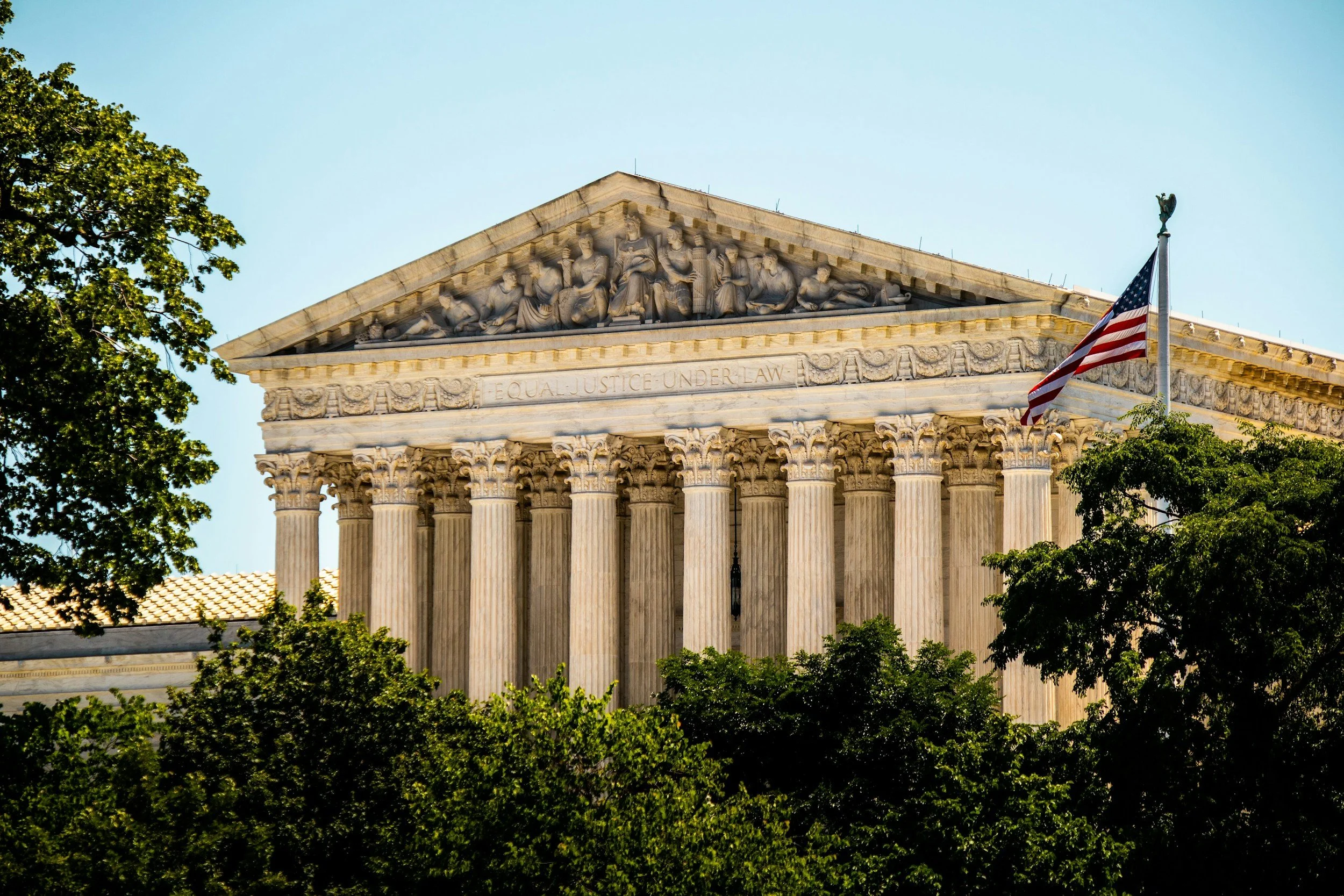
The Supreme Court grants review most readily when federal appellate courts disagree on the meaning of the same statute, when the question affects a large number of people, and when the federal government is on one side of every case. Cunha, Buenrostro-Mendez, and Herrera Avila check all three boxes.
The disagreement is not a narrow one about how to apply a settled rule to slightly different facts. It is a direct conflict over the meaning of identical statutory language, with three circuits squarely opposed and a fourth, the Seventh, leaning in the Second Circuit's direction. The government has lost in the Second Circuit, won in the Fifth and Eighth, and is litigating habeas petitions on this question by the tens of thousands across the country. The Second Circuit itself estimated the population covered by the dispute at "millions" of people.
The government will almost certainly file a petition for a writ of certiorari. Given the volume of pending litigation and the sheer number of detainees whose status depends on the outcome, it would be unusual for the Court not to grant review.
What This Means for Detained Immigrants and Their Families
In the meantime, jurisdiction continues to drive outcomes. A noncitizen detained in the Second Circuit (Connecticut, New York, and Vermont) is now, like one detained in the Seventh Circuit (Illinois, Indiana, and Wisconsin), substantially more likely to obtain a bond hearing under § 1226(a). A noncitizen detained in the Fifth Circuit (Texas, Louisiana, and Mississippi) or the Eighth Circuit (Arkansas, Iowa, Minnesota, Missouri, Nebraska, North Dakota, and South Dakota) faces a much steeper climb. Other circuits remain unsettled, with district courts overwhelmingly siding against the government even in the absence of binding appellate precedent.
ICE's longstanding practice of transferring detainees across circuits based on bed space continues to mean that the place of detention, not the place of arrest, often determines whether a habeas petition can succeed. That reality has not changed. But Cunha materially strengthens the position of detainees, their counsel, and habeas petitioners outside the Fifth and Eighth Circuits, and provides a fully developed appellate roadmap that other courts can follow.
Key Takeaway
The Second Circuit's decision in Cunha v. Freden transforms a developing circuit divide into a fully formed circuit split on one of the most consequential questions in immigration detention law. The disagreement is no longer about doctrine at the margins. It is about whether millions of long-term residents who entered without inspection can be held without bond hearings while their removal proceedings, which often last years, play out.
A Supreme Court resolution is now substantially more likely than it was two months ago. Until then, where a person is detained will continue to determine, in large part, whether they can ask a judge for release. For practitioners advising clients, family members, or employers, the practical guidance from our earlier post still holds: jurisdiction matters, habeas petitions remain a live option in much of the country, and the legal landscape continues to evolve quickly.
This blog post is for informational purposes only and does not constitute legal advice. Immigration enforcement policies change frequently. Consult with a qualified immigration attorney for guidance specific to your situation.